
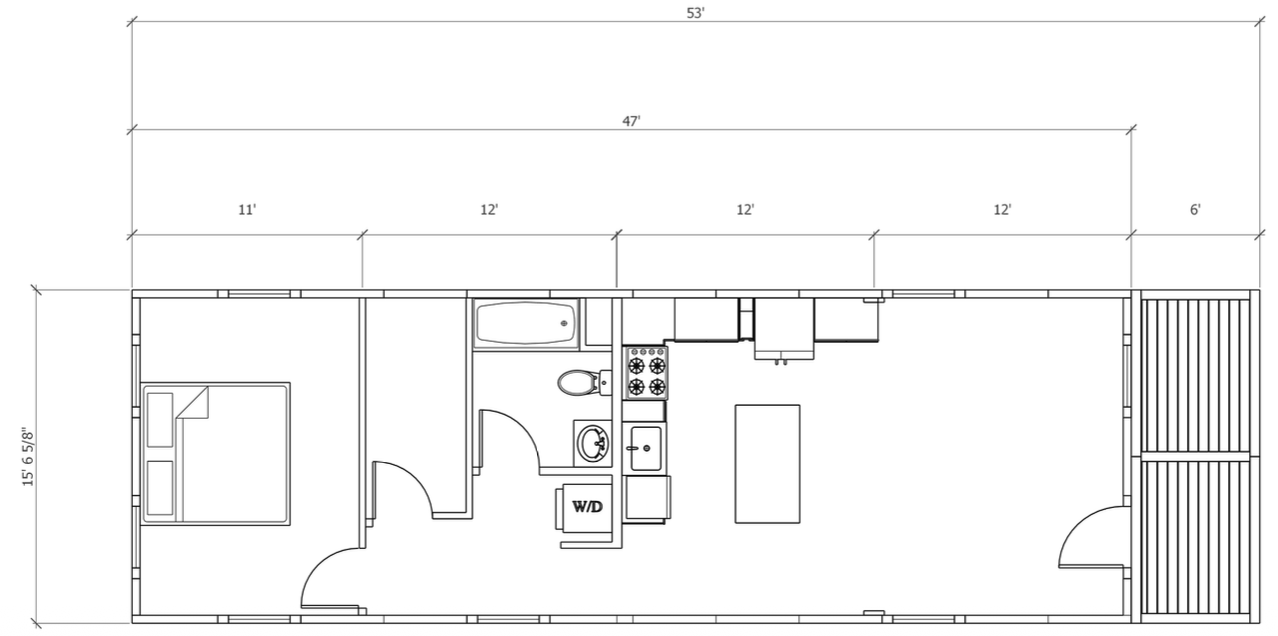
Local requirements
01Zoning, applicable development rules, and questions for the jurisdiction.

How it works
Follow the Goodwin Road example from site screening and conceptual planning to a project packet for manufacturer review. See the available evidence and the questions still to resolve.
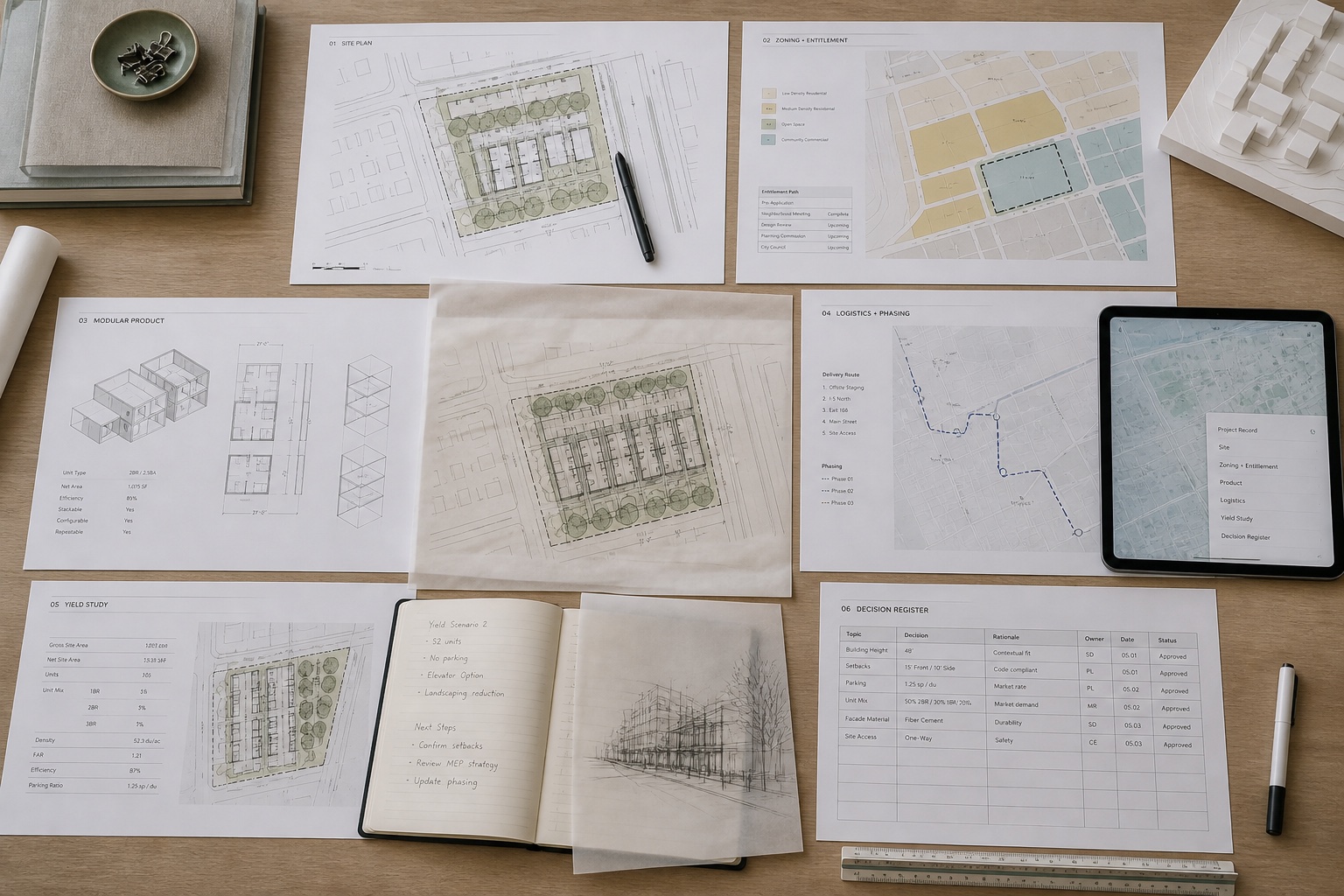
Goodwin Road: illustrative project walkthrough
Start with the site, what you want to build, and any plans or factory preferences you already have.
Screen the site
Review the parcel, relevant development requirements, and candidate products. See what the available sources support and which site, utility, or manufacturer questions still need confirmation.
Fit the plan
Test how home products and site constraints affect the conceptual plan and proposed yield. Review the estimate’s data sources, cost scope, and any developer-specific inputs alongside the layout.
Hand off the package
Bring the selected concept, quantities, preliminary estimates, and open questions into a Development Project Packet (DPP). Use it to request fit feedback, resolve requirements, and advance pricing discussions.
A change in one area can change the layout, factory options, or economics. GroundUp considers them together.
Zoning, applicable development rules, and questions for the jurisdiction.
Parcel geometry, physical constraints, access, and available utility information.
Permit data, local market and economic data, factory pricing, and developer-provided inputs.
Products, plant capabilities, service areas, delivery needs, and current project preferences.
Sources, assumptions, and open questions stay with the project. Your project team, the relevant jurisdiction, and the manufacturer confirm the design, approvals, pricing, and production requirements before later commitments.
Examples stay labeled as conceptual. GroundUp does not automate professional stamps, permit approvals, city calls, funding arrangements, or production acceptance.