A site you’re evaluating
Bring the address, intended project, and the questions you need answered.

For residential developers
See whether factory-built construction fits your site, compare suitable products and factories, and understand the preliminary economics before your next commitment.
For BTR communities, single-family subdivisions, and multifamily teams using or evaluating modular and factory-built housing.
Bring your site, project goals, and any plans or factory relationships you already have.
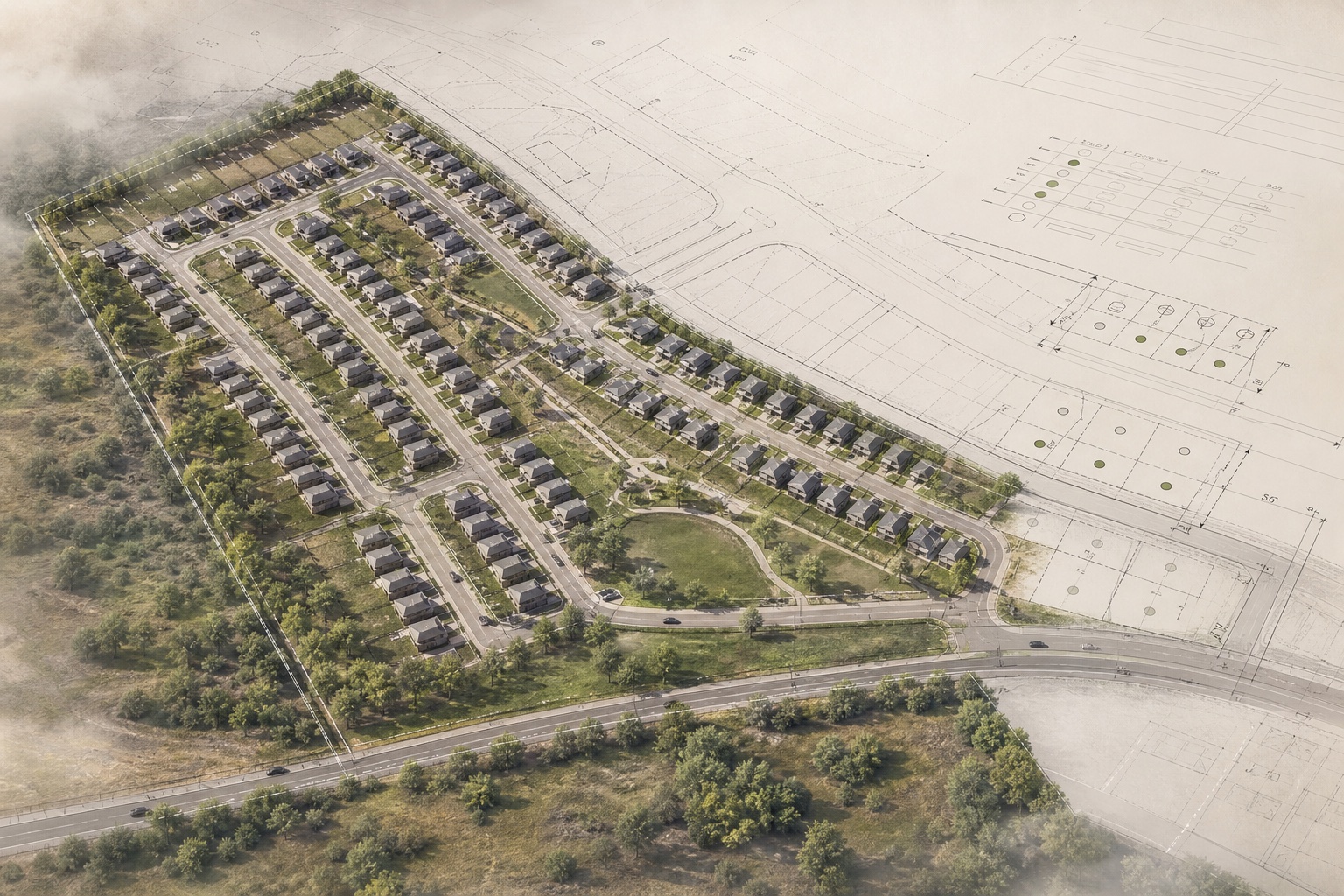
Compare how site layouts, home products, and factory requirements affect what you can build and what it may cost before the design is fixed.
Bring a preferred factory or compare available candidates. Start with the relationships and information you already have.
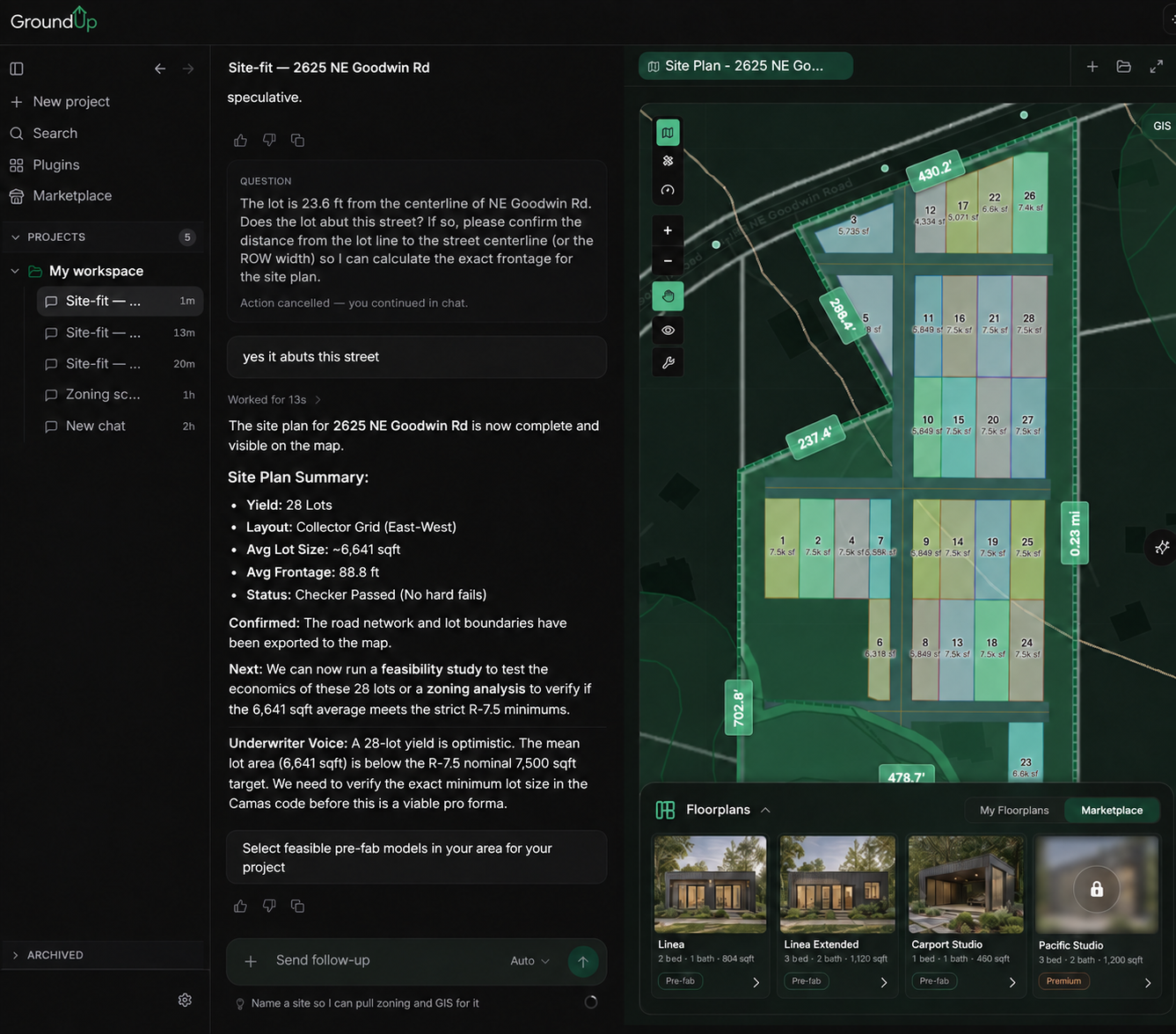
GroundUp builds preliminary project estimates using permit data, local market and economic data, and factory pricing. Your own project costs and assumptions can be incorporated to compare options against your budget and return targets.
Review what each estimate includes, what it excludes, and what still needs confirmation.
The highest unit count is not automatically the best project. Compare the layout, cost scope, factory fit, and remaining questions against your goals.
Use the project packet to move into factory review and the next conversation with your design or capital partners.
Bring the address, intended project, and the questions you need answered.
Review the current layout, product choices, and requirements before the next commitment.
Share the location, project type, and priorities, even before you have chosen a building system.
New to factory-built housing? Understand the options, what arrives from the factory, and what your team still needs to deliver.
Read the factory-built guideStart with your project, not a commitment to a building method. GroundUp helps you explore product and factory fit, understand the scope of preliminary pricing, and identify the site and delivery questions that still need answers. You do not need a factory selected to request access.
Yes. Bring the plans, product information, and relationships you already have. GroundUp can help evaluate the project around those inputs and prepare the questions for the next review.
A site or development goal and what you want to build. Existing plans, budgets, product choices, and factory contacts add useful context, but you do not need a complete project package to request access.
The purpose is to evaluate whether the available options fit your project. A review may identify a promising option, a revision worth testing, or an issue that needs resolving before you proceed. Do not treat a concept as a reason to commit when important information is missing.
No. Plans are conceptual and estimates are preliminary. Your project professionals, the jurisdiction, and the manufacturer confirm the relevant design, approvals, pricing, and production requirements before later commitments.
GroundUp reviews your request and follows up about access and the next steps for your project.